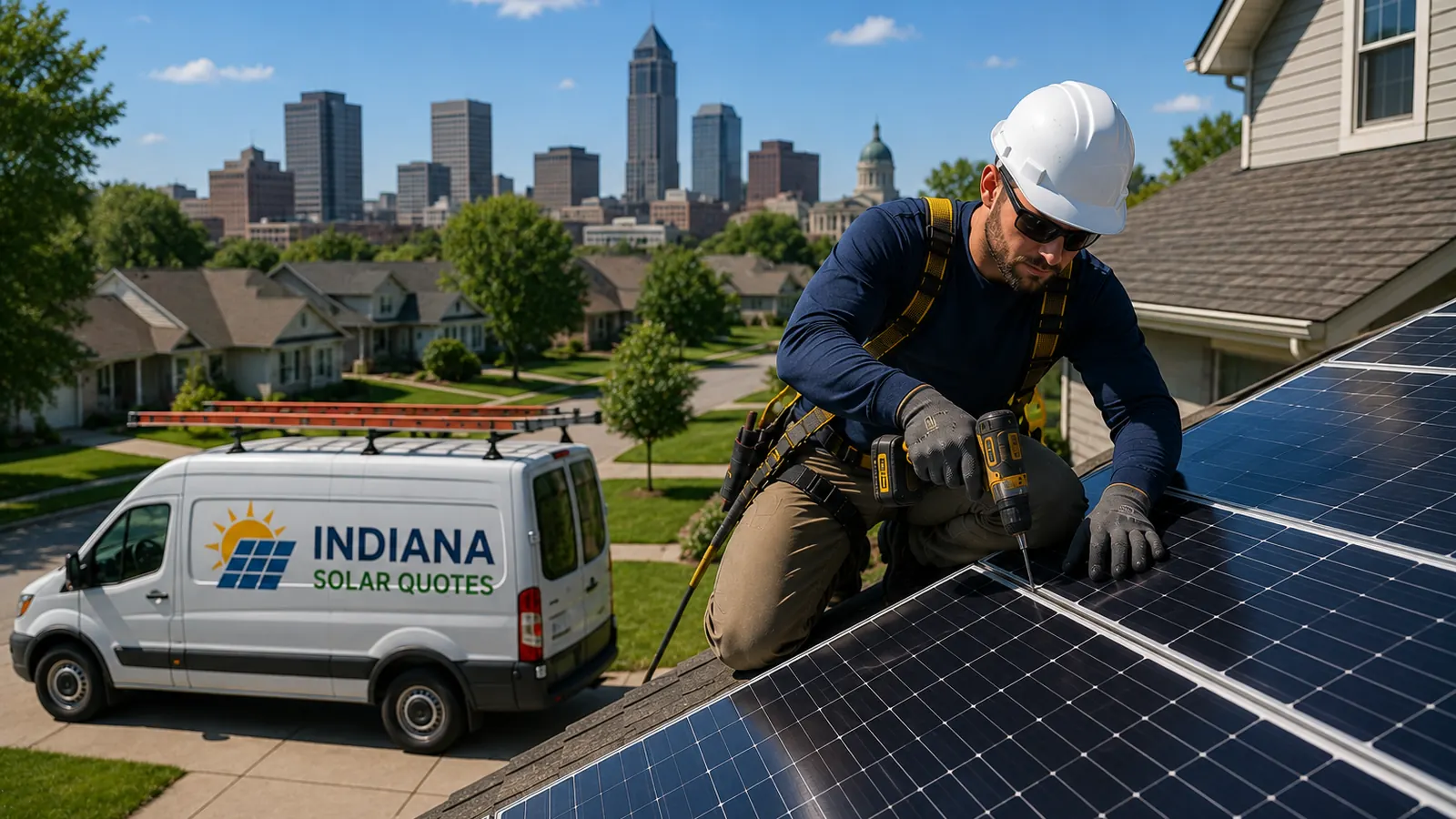
Rooftop solar is a long-term attachment to a short-term surface. The U.S. Department of Energy notes that residential solar panels usually last 20 to 25 years, which means the array you install this year is meant to still be sitting on your roof well into the 2040s. The roof underneath it may not have that kind of service life left.
That is why roof condition belongs at the front of the conversation, not somewhere near the end of it. It is one of the few parts of a solar project that is genuinely awkward to fix after the fact.
Why roof age comes before panel brands
DOE’s Homeowner’s Guide to Going Solar puts roof condition in the same short list as shade, orientation and slope, and it is blunt about it: “You should also consider the age of your roof and how long until it will need replacement.” The same guidance points out that a solar professional is the one who determines whether a roof is suitable in the first place.
The reason is mechanical rather than mysterious. Racking is bolted through the roof covering into the rafters or trusses, flashing is worked into the shingle courses around every attachment point, and conduit is run across the roof plane. Once that assembly exists, the roof under it cannot be replaced without taking the assembly apart.
So the useful question is not “is my roof okay right now.” It is “does my roof have enough remaining service life to sit under an array for the panels’ expected lifespan.” Those are different questions, and only the second one matters here.
How to find out how old your roof actually is
Most homeowners are guessing. A few ways to stop guessing, roughly in order of reliability:
- Your closing packet. Seller disclosure forms and the home inspection report from when you bought the house often state the roof’s age or last replacement year.
- Building department records. Reroofing usually requires a permit. Your city or county building department can tell you whether a roofing permit was pulled on your address and when it was finalized. In Indiana that record lives with the municipality or the county, depending on where you are, so start with whichever authority issues residential permits for your address.
- The contractor who did it. If a previous owner used a roofing company that is still operating, they may have the invoice on file.
- A condition assessment. Age is a proxy. What you actually want is an opinion on remaining life. A roofing contractor, a solar installer, or a structural engineer can look at granule loss, curling, decking soundness, flashing condition and ventilation and give you a range.
Ask for that opinion in writing, and ask what it is based on. “Looks fine” is not an assessment. A note that says the field shingles show moderate granule loss and the decking is sound, with an estimated remaining life range, is something you can act on.
What happens if the roof needs replacing after the panels are up
Nothing catastrophic. It is just more expensive and more complicated than doing it in the other order, in a few specific ways.
The array has to be detached. Panels, racking, rooftop conduit and sometimes the inverter come off before the roofer can start, then go back on afterward. That is a separate scope of work, usually priced per panel, and it is on top of the reroof itself. It also means the system is offline for however long the two crews take to coordinate.
Then there is the question of who owns the holes. Your roofer replaces the roof covering, your solar contractor re-flashes and re-seals every attachment point. If a leak shows up at a mount two winters later, you want it clear in advance which party is responsible for it. That gets much simpler when one project handles both.
None of this changes the economics of the system itself, but it does change the total you spend on the roof. If you are building out your numbers, our breakdown of what solar costs Indiana homeowners is the place to put the roof line item next to everything else.
Roof types and what penetrations look like on each
The attachment method changes with the roof covering, and so do the questions worth asking.
Asphalt shingle
The most common residential covering in Indiana and the most straightforward to mount on. Lag bolts go into rafters, and each one gets a flashing detail worked under the shingle course above it. The quality of that flashing is the whole ballgame. Ask whether the installer uses flashed mounts or relies primarily on sealant, and ask what the workmanship warranty on the penetrations covers and for how long.
Standing-seam metal
Clamps grip the seam, so many designs avoid penetrating the panel at all. Metal roofs also tend to outlast the array, which removes the timing problem entirely. Ask whether the proposed clamps are approved by your roof panel manufacturer, since using unapproved hardware can affect the roof warranty.
Tile, slate and low-slope membrane
Each needs specific hardware and specific flashing. Tile and slate are brittle and can break during install and during any later service visit. Low-slope membrane roofs may use ballasted racking instead of penetrations, or may require heat-welded flashing boots. Ask directly whether the crew has done your roof type before and who repairs breakage if it happens.
The structural side
An array adds dead load to the roof structure and adds wind uplift and snow load considerations to the attachment design. In Indiana that is handled through the permit process: the design gets reviewed by the authority having jurisdiction before work is approved, and the finished system is inspected. Our walkthrough of how a residential solar installation actually proceeds covers where permitting and inspection sit in the sequence.
What you should ask about is the engineering behind the layout: whether the design was stamped, what rafter size and spacing it assumed, and whether anyone verified those assumptions in your attic rather than from the driveway. Older Indiana housing stock varies a lot, and an assumption that holds on a 1998 truss roof may not hold on a 1948 rafter roof.
Three situations, three reasonable answers
- The roof is near the end of its life. Replace it first, or better, have both scopes done as one coordinated project. You pay for the reroof either way, and doing it now means you never pay to take the array off.
- The roof is relatively new and sound. Install and stop worrying about it. Keep the roof documentation with your solar paperwork so the next owner has it.
- Nobody can tell you which of those it is. Get an independent condition assessment before you sign a solar contract. A few hundred dollars of certainty is cheaper than a detach-and-reset in year six.
What to ask before you sign anything
- Does your proposal assume the existing roof stays, and did anyone inspect it?
- What remaining roof life would make you recommend replacing first?
- Who warrants the roof penetrations, for how long, and what voids that warranty?
- What is your written price to detach and reset the system if I reroof later?
- Will you coordinate directly with a roofing contractor, or is that on me?
- Ask the installer to confirm licensing and insurance for everyone who will be on the roof, and ask to see the certificate rather than taking it verbally.
- Ask for the assumptions behind any production estimate you are shown, including the tilt, azimuth and shading model used.
Our fuller checklist of questions to ask a solar installer in Indiana covers the contract and warranty side in more depth.
One note on timing
If part of your reason for sequencing the work a certain way is federal tax treatment, the rules changed. The residential clean energy credit under Section 25D no longer applies to expenditures made after December 31, 2025, and our page on Indiana solar incentives and tax credits explains where that leaves homeowners now. Talk to a tax professional about your own situation rather than relying on a contractor’s summary.
Where to go from here
The practical order is usually: establish the roof’s remaining life, decide whether the reroof happens first or never, then collect proposals that reflect that decision. Proposals written against two different assumptions about your roof are not comparable, and comparing them anyway is how people end up surprised.
When you are ready to see which participating providers cover your address, you can check what options are available for your home. Matching depends on service area, availability varies, and you decide whether to move forward from there. Homeowners around the state, including in and around the Indianapolis area, tend to get more useful answers when they bring the roof question with them to the first conversation instead of discovering it halfway through a site survey.
Leave a Reply